Bangdian · Cultural Decoding and Resonance
Decoding the color codes and pattern symbolism of Bangdian to understand the life biography of Xizang women
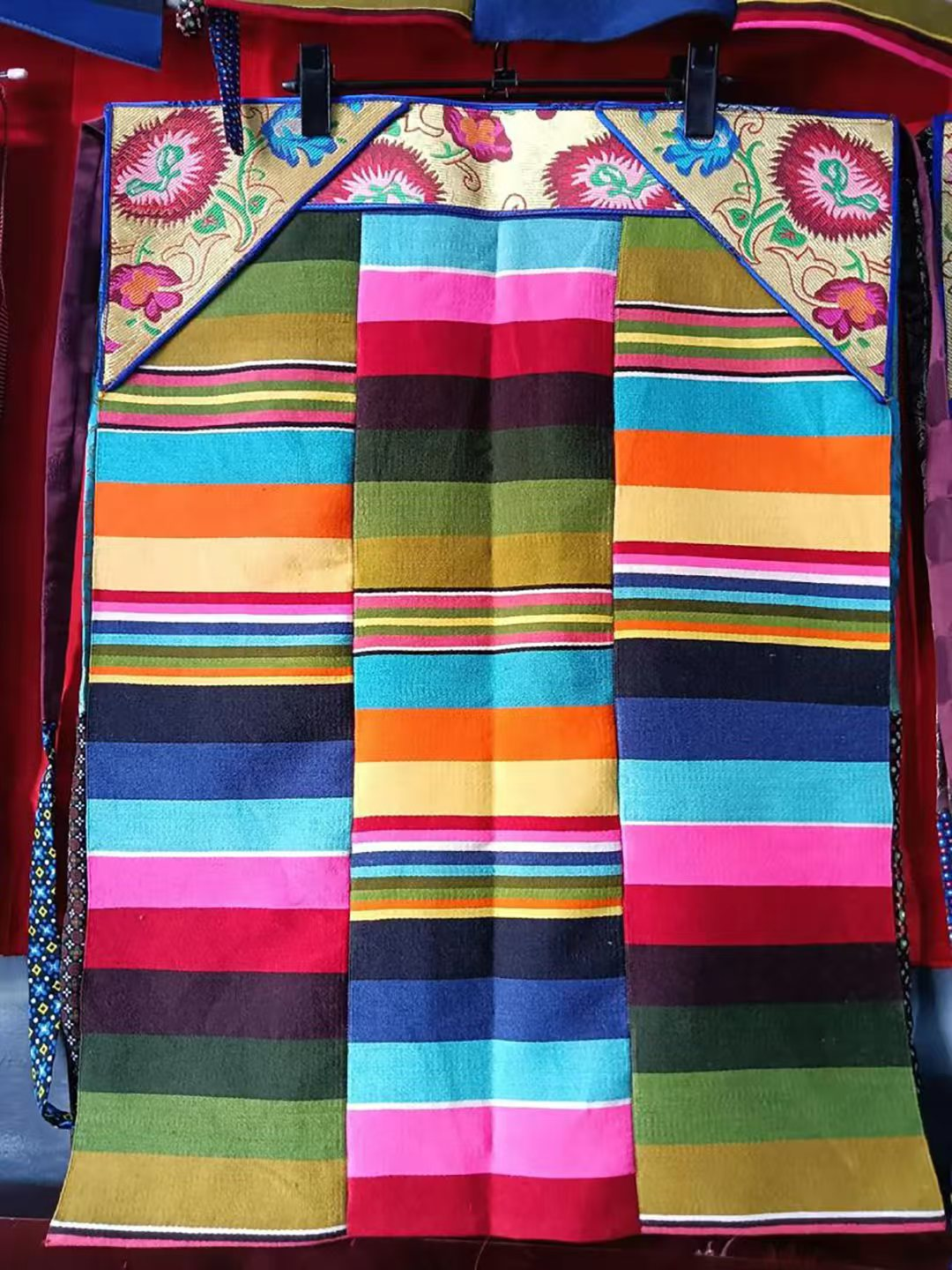
Hover over the color dots
Hover over the color dots to view their meanings
Hover over the color dots to view their meanings
The six classic color series of Bangdian: white, yellow, red, blue, green, and black, derived from the natural elements of the plateau
Bangdian Cultural Connotation
Life Histories and Cultural Carriers of Xizang Women
"Bangdian is the rainbow around Xizang women's waists, and even more, the biography of their lives."
Bangdian: A Witness to the Growth of Xizang Women’s Life
The style and color of Bangdian change with life stages, witnessing the complete life journey of Xizang women
The Life Meaning of Bangdian Patterns
It is a concrete expression of the Tibetan people’s understanding of the essence of life, living conditions and spiritual beliefs, carrying the philosophy and wishes throughout the entire life.
Awe & Recognition of Life Origin
The inspiration for Bangdian patterns is rooted in the natural life and primitive beliefs of the plateau, expressing the Tibetan people’s awe for the origin of life:
- Yongzhong Pattern: Shaped like a rotating sun and flame, symbolizing the eternal reincarnation of life and endless vitality
- Cross Pattern: Derived from sun worship, symbolizing that sunlight nourishes all things and life grows vigorously
- Spiral Pattern: Imitating the trajectory of water flow and clouds, symbolizing that life is endless like all things in nature
Conveying the life cognition of "coexistence and prosperity between humans and nature"
Guardianship & Blessings for Life Journey
Different patterns guard different stages of life, becoming 'spiritual amulets' for Tibetan women throughout their lives:
- Maidenhood: A simplified auspicious knot, praying for smooth and harmonious growth
- Adulthood/Marriage: The Eight Auspicious Symbols pattern, embodying wishes for a happy marriage and a prosperous family
- Family-Running Stage: The Tenfold Powerful Symbols (Kalachakra) pattern, symbolizing family well-being and harmony between life and the universe
- Elderly Stage: The simple and primitive Precious Vase pattern, representing a fulfilled life and blessing for future generations
Every pattern carries beautiful wishes for life
Inheritance & Continuity of Life
Bangdian patterns are the life link connecting the past and the future, carrying the intergenerational transmission of culture and spirit:
- When weaving patterns, weave the stories and beliefs passed down from ancestors into the warp and weft
- Explain the meanings of patterns to pass on the Xizang people’s outlook on life and values
- Patterns are passed down from generation to generation, continuing the wisdom of life and the root of culture
Let every generation of Xizang people find their spiritual belonging in the patterns
The Exclusive Cultural Meanings of 12 Patterns
The patterns on Bangdian are visual symbols integrating Tibetan Buddhism and indigenous Bon religion, carrying wishes for disaster elimination, blessing and lasting good fortune
Auspicious Knot
Two connected swastika emblems, symbolizing unity, harmony and peace, and embodying wishes for a smooth journey for Xizang women’s growth.
Wonderful Lotus
A fully bloomed lotus pattern with flowers and fruits, symbolizing nobility and purity, and embodying good wishes for marriage and character.
Precious Umbrella
It is meant to eliminate the five poisons of greed, anger, ignorance, arrogance and doubt among all beings, symbolizing saving suffering and guarding the peace of the life journey.
Right-Turning Conch
Usually white, symbolizing that the sound of Buddhism spreads everywhere, conveying the spiritual core of coexistence between life and faith.
Golden Wheel
Symbolizing the boundlessness and unceasing operation of Buddhism, meaning life is endless and progresses in a cycle like the Dharma wheel.
Golden Banner
Symbolizing the supremacy and unshakable nature of Buddhism, enabling ultimate liberation, and embodying wishes for the ultimate perfection of life.
Precious Vase
Gathers endless nectar, embraces good deeds and wisdom, can fulfill all beings’ wishes for complete enlightenment, and is a symbol of long-lasting blessings in life.
Golden Fish
Symbolizes the state of liberation, and also means recovery, eternal life and rebirth, representing life breaking free from constraints and gaining freedom.
Yongzhong Pattern
Also known as the swastika pattern, it is regarded as a symbol of fire and the sun, representing eternal life force and reincarnation, and expressing awe for the origin of life.
Cross Pattern
Represents the sun in Xizang culture, with meanings of prosperity, completeness and vigorous growth of life, expressing gratitude for nature nourishing life.
Spiral Pattern
Also known as Dog Nose Pattern or Tang Grass Pattern, it looks like a dog’s nose, with rhythmic rotating flowers and leaves, symbolizing that life is endless like all things in nature.
Tenfold Powerful Symbols
Composed of seven Sanskrit characters of the Kalachakra Mantra and three additional symbols, it symbolizes the unity of the universe and life, family well-being, and guards the life harmony in the family-running stage.